
What are your responsibilities at Circular Materials?
I handle qualitative and quantitative analyses within the company, aiming to provide as much useful information as possible for the development of CM’s technology. My work also includes identifying incoming and outgoing resources to make their valorization more efficient. My main goal is to offer maximum technical and analytical support to the CM team, helping them determine the optimal treatment for each type of waste.
What is your educational background?
I earned a Higher Technician diploma in Product Sustainability and Nanotechnologies. CM was my launchpad into the professional world, and I have recently completed my third year with the company. During this time, I have developed “hybrid” skills in both laboratory techniques and R&D for industrial chemical processes, broadening my knowledge in the sector. This environment has also allowed me to enhance my management and multitasking skills, learn new soft skills, and refine my operational abilities.
How have you developed your skills at CM?
CM is a stimulating environment that constantly challenges you to apply your existing skills and acquire new ones. The two most important skills I have developed here are multitasking and managing challenges during ongoing projects. In general, all my technical skills are constantly evolving, adapting to the work as it develops and becomes more structured.
How would you describe your relationship with the team?
I have built a strong relationship with my colleagues, both inside and outside the company. The diversity in our educational backgrounds and skill sets allows us to create constructive and stimulating interactions, while also helping us develop new abilities.
What aspects of Circular Materials’ project do you appreciate the most?
What impressed me most about CM is its commitment to creating a sustainable solution for the recovery and valorization of industrial waste. Recovering resources that are increasingly difficult to extract is key to a circular approach and crucial for protecting the environment.
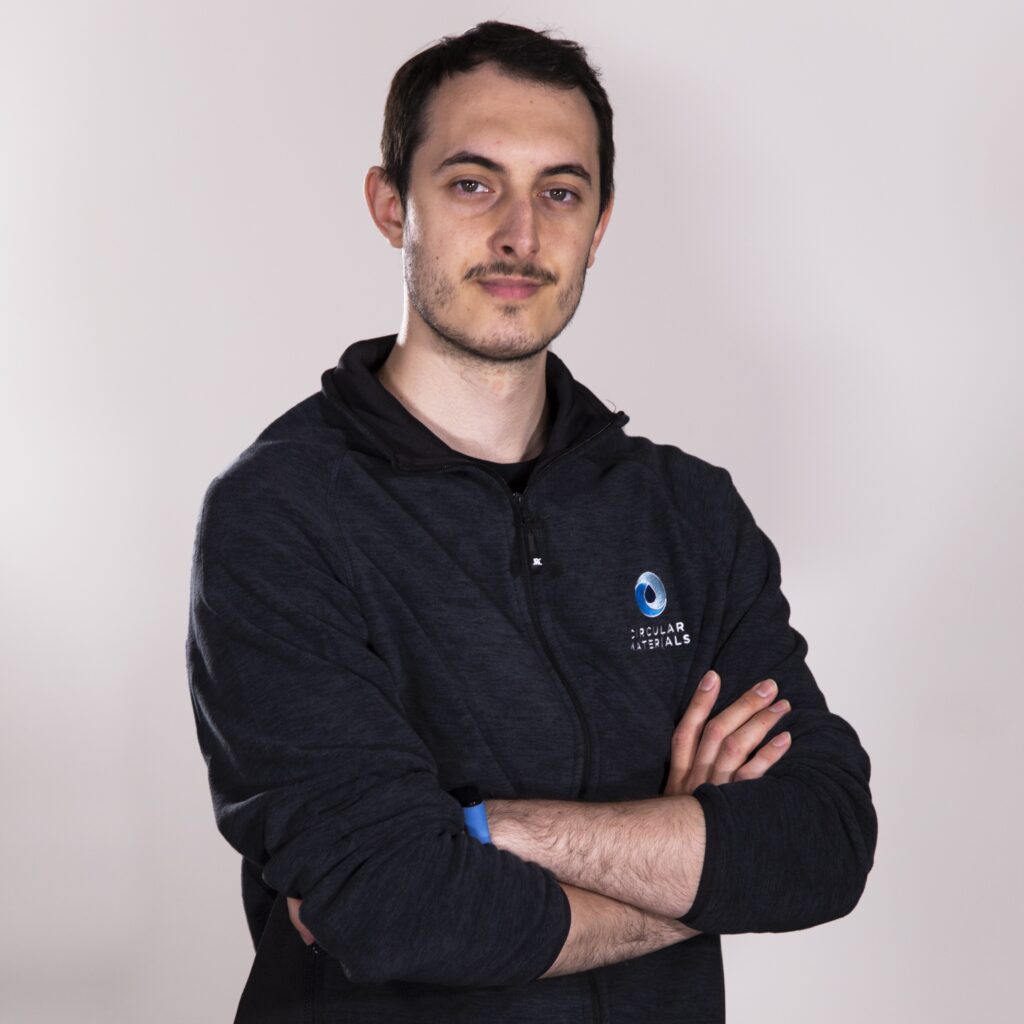
Nicola Camporese
Lab Technician