
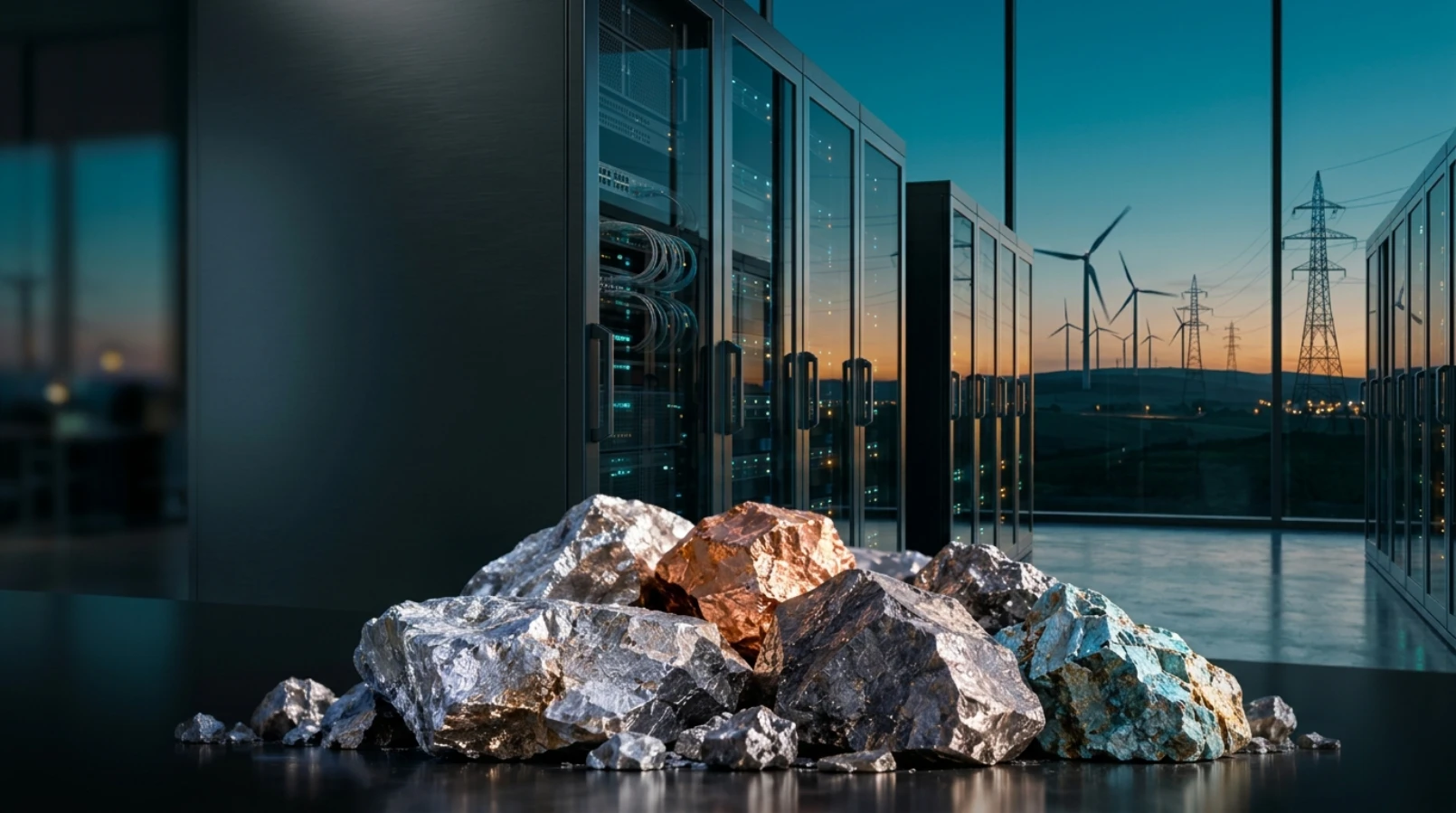
Europe’s demand for Critical Raw Materials (CRMs) is no longer being driven by the energy transition alone. The same critical minerals needed for batteries, renewable energy technologies and electricity networks are also increasingly required for AI infrastructure, data centres, defence systems, semiconductors and advanced manufacturing.
This matters because these sectors are not developing in isolation. Europe wants to decarbonise its economy, expand its digital infrastructure, strengthen industrial competitiveness and increase strategic autonomy at the same time.
The first instalment of this series examined the ambitious targets set by the EU’s Critical Raw Materials Act (CRMA) for the extraction, processing and recycling of CRMs by 2030. The second explored how considerable quantities of valuable material continue to be lost through waste streams such as industrial wastewater.
Meeting the CRMA’s targets requires reliable access to critical and strategic raw materials, yet Europe is failing to capture the full value of materials moving through its industrial economy.
The disposal of products at the end of their lives is highly visible. By contrast, the loss of dissolved valuable metals in wastewater goes largely unseen. As critical minerals demand accelerates across several strategically important sectors at once, Europe simply cannot afford to continue losing its critical mineral resources and must look to new forms of extraction, recovery and reuse to secure tomorrow’s supply.
Reliable access to critical minerals is vital if Europe is to compete in key global sectors; without them, the continent risks losing out to international competitors. This is why access to the critical raw materials Europe needs is now viewed more as a key strategic and security issue rather than simply an environmental one. The CRMA recognises that these materials are essential not only for clean technologies, but also for digital, defence and space applications.
Several of Europe’s highest-priority sectors are competing for access to the same limited supply of strategic raw materials. The stark reality is that Europe is overly reliant on other regions for its critical mineral supply. For example, China provides 100% of the EU’s supply of heavy rare earth elements (REEs). Europe knows this to be the case, but the real question is how quickly it can develop more diverse and resilient sources of critical raw materials.
Security of supply is paramount, as supply disruptions would affect multiple strategic sectors, hamper growth and undermine Europe’s wider economic and national security.
Artificial intelligence is often framed as though it exists mainly in software and a virtual realm, but it is completely reliant on physical hardware to function. Data centres depend on advanced electronic equipment, thermal management systems and grid connections to supply them with vast quantities of reliable power.
The International Energy Agency (IEA) projects that global electricity consumption from data centres will more than double by 2030, reaching around 945 TWh per year, with AI the most significant driver for this growth. Copper, nickel, REEs and other critical raw materials, supplied through complex global value chains, are essential to the hardware, cooling equipment and energy infrastructure behind these systems.
This poses a strategic challenge for Europe. Major economies are competing in the AI race, but there can be no truly sovereign AI if Europe remains heavily dependent on other regions for its critical mineral supply. The European Commission is keen to boost technological sovereignty, but the critical minerals issue is central to the strategy.
Defence is a key priority for European governments, and with defence spending rising across Europe, demand for defence technologies and the critical raw materials needed to produce them is increasing too. The European Defence Agency (EDA) reported that EU defence expenditure reached €343 billion in 2024, a 19% increase on 2023, with defence investment exceeding €100 billion for the first time. Access to critical minerals for defence underpins Europe’s future military security.
Defence systems, aircraft technologies, satellites and communications equipment all rely on high-performance materials that must be available consistently, securely, at scale and from friendly nations. In this context, access to strategic raw materials is no longer only a question of industrial efficiency; it is also a question of security.
Heavy dependence on a limited number of external suppliers leaves Europe exposed to trade disruption, export restrictions and the possibility of critical mineral supply being used as geopolitical leverage.
However, the needs of advanced defence-related technologies overlap with those of the wider civilian economy, which both depend on and help sustain defence capability, while competing for the same pool of critical raw materials.
Copper, nickel, titanium, tungsten, gallium and REEs support multiple applications across electronics, alloys, magnets, sensors, energy systems and manufacturing equipment. As more sectors compete for the same material base, supply pressure becomes harder to manage, and disruption in one part of the value chain quickly affects others.
Stronger supply chain resilience fundamentally means greater security for the populations dependent on them.
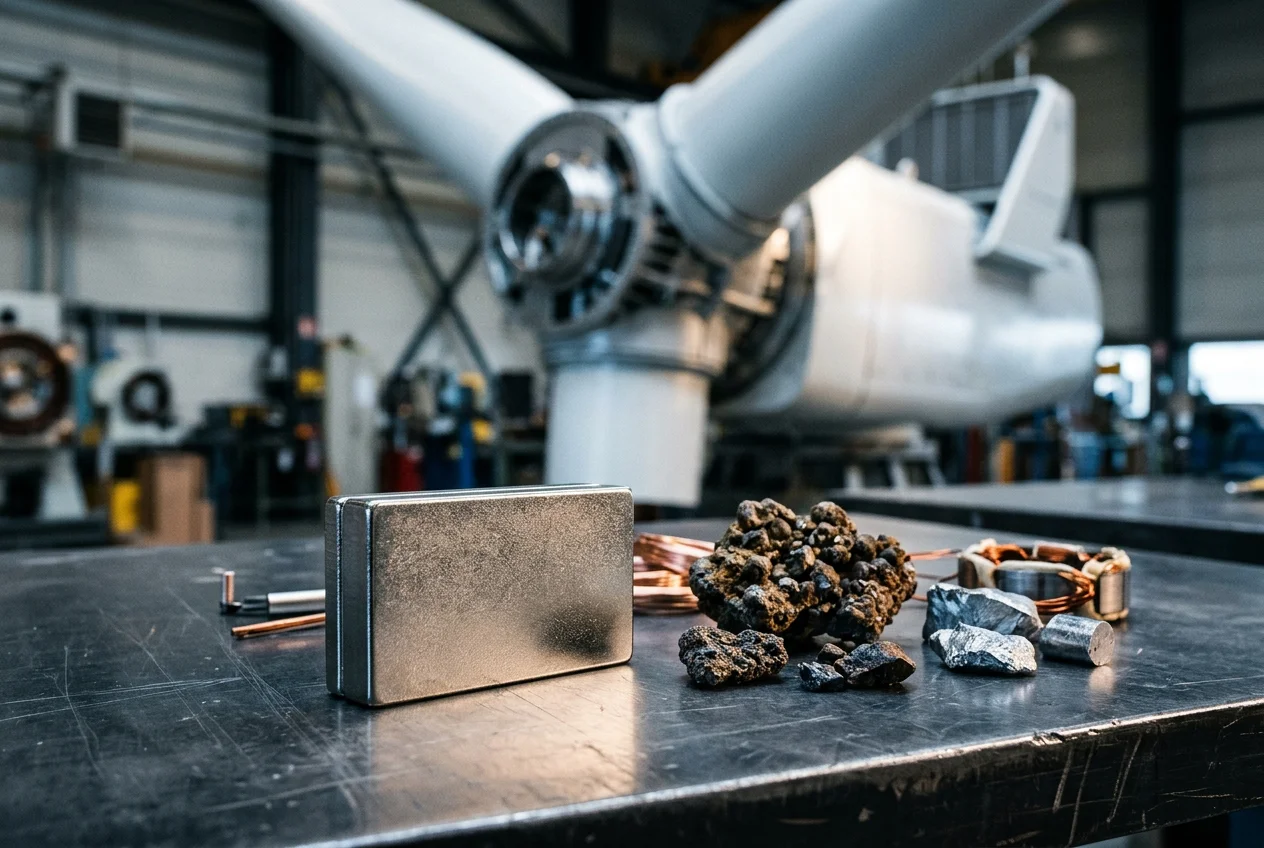
Solar and wind infrastructure, batteries and grid expansion all depend on lithium, nickel, cobalt, copper, graphite and REEs. These key energy transition minerals are needed not only to produce clean technologies, but also to connect, store and transmit the electricity they generate.
The IEA estimates that demand for minerals used in clean energy technologies will more than double by 2030 under current policy settings, and nearly triple under a committed net-zero pathway.
This creates a compounding demand challenge. As Europe expands renewable power, electrifies transport and modernises its electricity networks, it must also supply the digital and industrial systems that depend on the same or adjacent material inputs. Critical mineral demand is becoming increasingly concentrated around a group of metals essential to several transitions at once. Europe needs economic growth, security and connectivity, and in reality, it is difficult to prioritise any one of them.
For Europe’s resource strategy, this makes circularity a necessity. Domestic primary extraction and imports need to be matched by stronger systems for retaining valuable materials already within the economy. Europe cannot afford to lose recoverable critical raw materials through waste streams that could instead become sources of secondary supply.
Europe cannot respond to rising critical mineral demand through any single supply route; demand is simply too vast. AI, defence and the energy transition are all increasing demand for overlapping groups of strategically important materials.
The European Commission, for example, projects demand for rare earth metals to increase sixfold by 2030, driven in part by their importance to technologies such as permanent magnets used in wind turbines and electric motors.
These transitions are advancing simultaneously and often depend on the same or adjacent groups of materials. Demand is growing faster than new mines, processing plants or international supply agreements can respond. Europe will need a balanced supply portfolio combining responsible extraction, diversified trade, stronger domestic processing, recycling and recovery.
Secondary raw materials can strengthen this mix by retaining more value from materials already circulating through the industrial economy. This includes materials contained in conventional end-of-life products, as well as dissolved metals moving through industrial wastewater and other less visible waste streams.
Recovery will not replace primary supply, but it can reduce avoidable losses and provide an additional domestic source of strategically important materials.
Meeting Europe’s ambitions in building a clean, renewable energy system, becoming a world leader in AI and digital technologies, and maintaining a robust and cutting-edge military presence on the world stage all depend on the continent expanding its access to virgin critical minerals while also making more efficient and circular use of its existing resources.
In the modern world, success in any of these ambitions depends on success in all, and Europe must be ready to build a CRM supply system capable of supporting all three.